
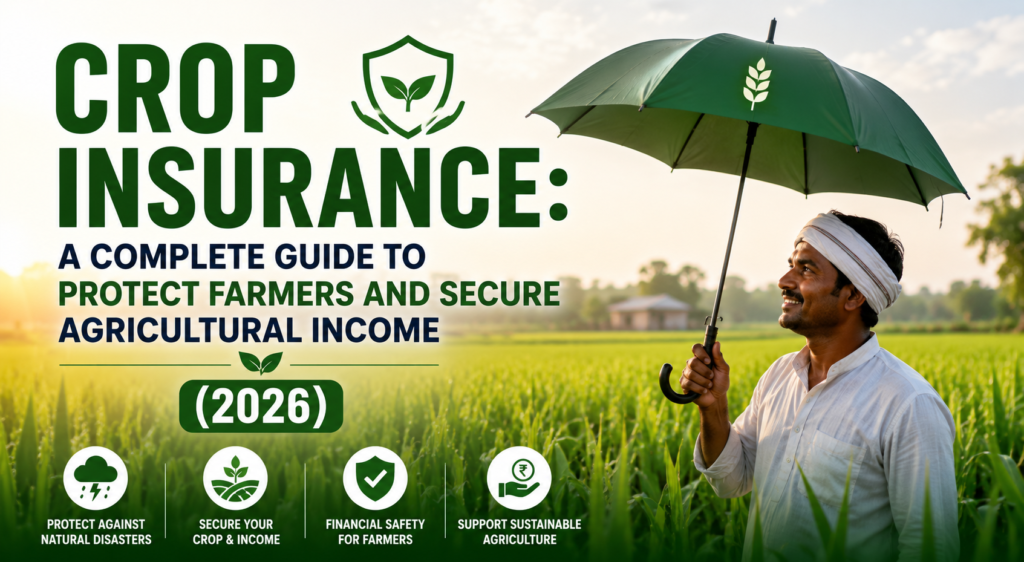
Crop Insurance: A Complete Guide to Protect Farmers and Secure Agricultural Income (2026)
Introduction
Farming is one of the most rewarding professions, but it also comes with many risks. Unpredictable weather, floods, droughts, pests, diseases, and natural disasters can damage crops and reduce farmers’ income. These challenges make financial protection an important part of modern agriculture.
Crop Insurance provides financial security by helping farmers recover losses caused by unexpected events. It reduces the financial burden of crop failure and gives farmers the confidence to continue farming even after difficult seasons.
Whether you grow food grains, fruits, vegetables, or commercial crops, choosing the right insurance plan can protect your investment and support long-term farming success.
Quick Answer
Crop Insurance is a financial protection scheme that compensates farmers for crop losses caused by natural disasters, adverse weather conditions, pests, or diseases. It helps reduce financial risks, protect farm income, and support sustainable agriculture.
What Is Crop Insurance?
Crop Insurance is an agricultural risk management program designed to protect farmers from financial losses due to crop damage. Farmers pay a premium, and if their crops are affected by covered risks, they receive compensation according to the policy terms.
Insurance coverage may include losses caused by drought, floods, cyclones, hailstorms, excessive rainfall, pest attacks, diseases, and other natural calamities depending on the selected plan.
Why Is Crop Insurance Important?
Agriculture depends heavily on weather and environmental conditions that cannot always be controlled. A single natural disaster can significantly affect crop production and reduce farm income.
Crop Insurance helps farmers manage these uncertainties by providing financial assistance after crop losses. It also improves financial stability, encourages investment in better farming practices, and supports long-term agricultural growth.
Benefits of Crop Insurance
Crop Insurance offers several benefits to farmers. It provides financial protection against crop failure and reduces the economic impact of natural disasters. Farmers can recover part of their investment and continue farming without severe financial stress.
Insurance also improves access to agricultural loans because many financial institutions consider insured farms less risky. It encourages farmers to adopt improved farming techniques and invest in quality seeds, fertilizers, and modern equipment.
Another important benefit is income stability. Even during difficult seasons, compensation helps farmers maintain their livelihood and prepare for the next crop cycle.
Who Can Apply for Crop Insurance?
Most insurance schemes are available for individual farmers, tenant farmers, sharecroppers, and farmer groups, depending on government guidelines and insurance providers.
Eligibility requirements may vary according to the crop, region, insurance scheme, and local agricultural policies. Farmers should always verify eligibility before applying.
How Does Crop Insurance Work?
The process begins when a farmer enrolls in an approved insurance scheme by paying the required premium. The insurance policy specifies the crops covered, insured amount, premium, and eligible risks.
If crop damage occurs due to covered events, an assessment is conducted according to policy guidelines. After verification, eligible farmers receive compensation based on the extent of the loss and policy conditions.
Types of Crop Insurance
Different insurance plans are available to meet various farming needs. Yield-based insurance protects against production losses when crop yield falls below a specified level.
Weather-based insurance provides compensation when rainfall, temperature, or other weather conditions exceed defined limits. Some policies also offer protection against localized natural disasters, pest attacks, and post-harvest losses depending on the scheme.
Selecting the right insurance plan depends on crop type, farming location, and risk factors.
Common Mistakes to Avoid
Many farmers do not read policy terms carefully before purchasing insurance. Missing enrollment deadlines, providing incorrect information, or failing to report crop damage on time may affect claim approval.
Farmers should understand policy coverage, maintain proper records, and follow claim procedures to receive timely compensation.
Frequently Asked Questions (FAQs)
Q1. What is Crop Insurance?
Crop Insurance is a financial protection program that helps farmers recover losses caused by natural disasters, weather conditions, pests, and diseases.
Q2. Who can apply for Crop Insurance?
Eligible farmers, tenant farmers, sharecroppers, and farmer groups can apply depending on the insurance scheme and government guidelines.
Q3. What risks are covered?
Coverage may include drought, floods, cyclones, hailstorms, heavy rainfall, pest attacks, diseases, and other covered natural events.
Q4. Does Crop Insurance cover every crop?
Coverage depends on the selected insurance scheme, crop type, and regional guidelines.
Q5. Why is Crop Insurance important?
It helps reduce financial risk, protects farm income, supports agricultural investment, and provides stability during difficult farming seasons.
Conclusion
Crop Insurance plays an important role in protecting farmers against unexpected agricultural risks. It provides financial support after crop losses, improves income security, and encourages sustainable farming practices.
Choosing the right insurance plan helps farmers reduce uncertainty, protect their investment, and continue farming with greater confidence.
Ready to Protect Your Farm?
Protecting your crops is an important step toward long-term farming success. PPD Agrotech provides reliable crop protection guidance and agricultural support to help farmers make informed decisions. As Agriculture Experts, we help farmers explore suitable farming solutions, improve risk management, and build a stronger future for agriculture. Contact PPD Agrotech today to learn more.