
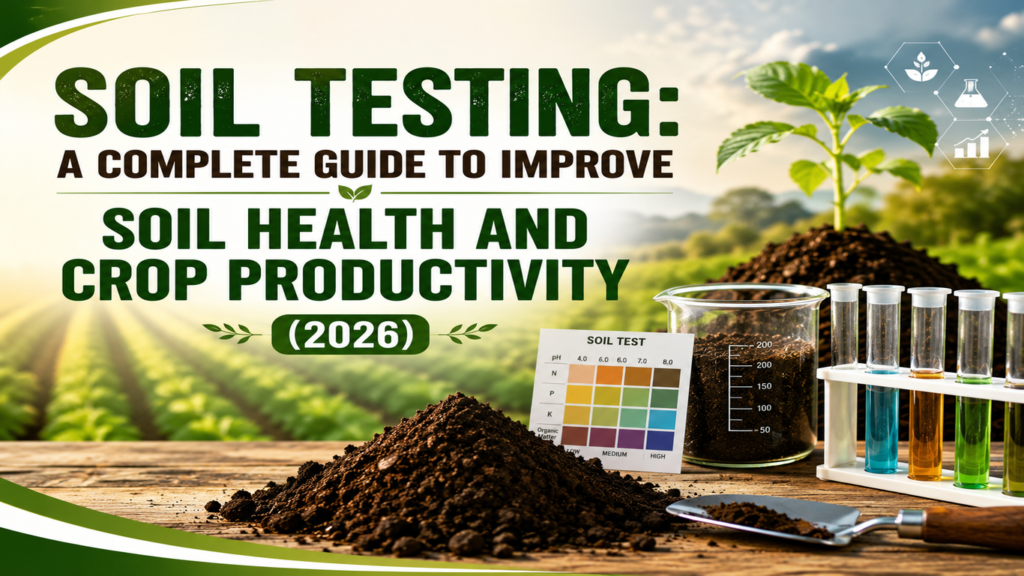
Soil Testing: A Complete Guide to Improve Soil Health and Crop Productivity (2026)
Introduction
Healthy soil is the foundation of successful farming. No matter how good your seeds, irrigation system, or farming equipment are, poor soil quality can reduce crop growth and lower yields. Many farmers apply fertilizers without understanding the actual condition of their fields, which often leads to higher costs and poor crop performance.
Soil Testing is one of the most effective farming practices for improving soil health and increasing crop productivity. By analysing soil nutrients, pH level, and organic matter, Soil Testing helps farmers apply the right fertilisers in the right quantity. This improves crop growth, reduces unnecessary expenses, and supports sustainable agriculture.
Whether you grow cereals, vegetables, fruits, or commercial crops, regular soil analysis helps you make informed farming decisions and maintain long-term soil fertility.
Quick Answer
Soil Testing is the scientific process of analysing soil samples to determine nutrient levels, soil pH, organic matter, and other important soil properties. It helps farmers improve soil fertility, increase crop yield, reduce fertiliser waste, and make better farming decisions.
What Is Soil Testing?
Soil Testing is a scientific method used to evaluate the fertility and health of agricultural soil. Farmers collect soil samples from different parts of a field and send them to a certified laboratory for analysis.
The test measures important factors such as nutrient levels, pH value, salinity, organic carbon, and micronutrients. Based on the results, farmers receive recommendations on fertilizer application and soil management practices that support healthy crop growth.
Instead of relying on guesswork, farmers can make informed decisions that improve productivity while protecting soil health for future farming seasons.
Why Is Soil Testing Important?
Every field has different nutrient levels, and these levels change after every crop cycle. Without Soil Testing, farmers may apply too much or too little fertilizer, resulting in lower yields, nutrient imbalance, and unnecessary farming expenses.
Regular soil analysis helps identify nutrient deficiencies before planting. It improves fertilizer efficiency, promotes balanced crop nutrition, protects soil fertility, and increases farm profitability. As modern agriculture continues to evolve, soil analysis has become an essential practice for sustainable farming.
Benefits of Soil Testing
Regular Soil Testing offers many benefits for farmers. It ensures crops receive the right nutrients at the right time, leading to better plant growth and higher yields. Farmers can also reduce fertilizer costs by applying nutrients according to actual soil requirements instead of estimates.
Healthy soil supports stronger root development, better water retention, improved crop quality, and higher productivity. Soil analysis also reduces nutrient runoff, protects nearby water sources, and preserves soil fertility for future farming.
In addition, farmers can select suitable crops based on soil conditions and create effective nutrient management plans that improve overall farm performance.
What Does a Soil Test Measure?
A professional soil test examines several important properties that influence crop growth. These include soil pH, nitrogen, phosphorus, potassium, calcium, magnesium, sulfur, organic carbon, and electrical conductivity.
Many laboratories also measure micronutrients such as zinc, iron, boron, manganese, and copper. Some reports include soil texture and salinity analysis to provide a complete understanding of field conditions.
These results help farmers make accurate fertilizer decisions and improve overall agricultural productivity.
How Often Should Soil Testing Be Done?
Agricultural experts generally recommend Soil Testing once every two to three years. However, farmers growing vegetables, fruits, greenhouse crops, or other high-value crops may benefit from annual testing.
Regular monitoring helps farmers track changes in soil fertility, adjust fertilizer application, and maintain healthy soil throughout every growing season.
Soil Testing Process
The Soil Testing process begins by collecting soil samples from different locations in the field. Samples are usually taken from a depth of 15 to 20 centimeters using clean tools. Stones, roots, and other unwanted materials are removed before mixing the samples.
The samples are sent to a certified laboratory where experts analyze nutrient levels, soil pH, organic carbon, and micronutrients. Farmers then receive recommendations for fertilizer application and soil improvement based on the test results.
Types of Soil Testing
Different types of soil analysis are available depending on farming requirements. Chemical testing measures nutrient levels and soil pH. Physical testing evaluates soil texture, structure, drainage, and water-holding capacity.
Biological testing focuses on microbial activity and organic matter, while specialized testing measures salinity, micronutrients, and contaminated soil. Choosing the right testing method helps farmers improve crop performance and soil health.
Common Mistakes to Avoid
Many farmers collect soil samples incorrectly or ignore laboratory recommendations. Collecting soil from only one location, using contaminated tools, or taking samples immediately after fertilizer application may produce inaccurate results.
Farmers should always collect representative samples, follow expert recommendations, and repeat soil testing regularly to maintain healthy and productive farmland.
Frequently Asked Questions (FAQs)
Q1.What is Soil Testing?
Soil Testing is the process of analyzing soil samples to determine nutrient levels, soil pH, organic matter, and other properties that affect crop growth and productivity.
Q2.Why is soil testing important?
It helps farmers improve soil fertility, apply fertilizers accurately, reduce production costs, and increase crop yield.
Q3.How often should soil testing be done?
Most experts recommend testing soil every two to three years, while intensive farming systems may require annual testing.
Q4.Which nutrients are measured?
A standard test measures nitrogen, phosphorus, potassium, calcium, magnesium, sulfur, micronutrients, soil pH, organic carbon, and electrical conductivity.
Q5.Can soil testing improve crop yield?
Yes. Proper nutrient management based on soil analysis helps improve crop quality, increase yield, and maintain long-term soil fertility.
Conclusion
Regular Soil Testing is one of the best investments farmers can make for long-term agricultural success. It helps improve soil fertility, increase crop productivity, reduce unnecessary fertilizer use, and support sustainable farming practices.
By making soil analysis a routine part of farm management, farmers can improve crop quality, reduce production costs, and achieve better harvests while protecting their land for future generations.
Ready to Improve Your Soil Health?
Healthy soil is the first step toward higher crop productivity and sustainable farming. PPD Agrotech provides expert guidance and Modern Farming Solutions to help farmers improve soil health through professional soil analysis, nutrient management, quality agricultural inputs, and advanced farming practices. Contact PPD Agrotech today and take the next step toward healthier soil and better harvests.